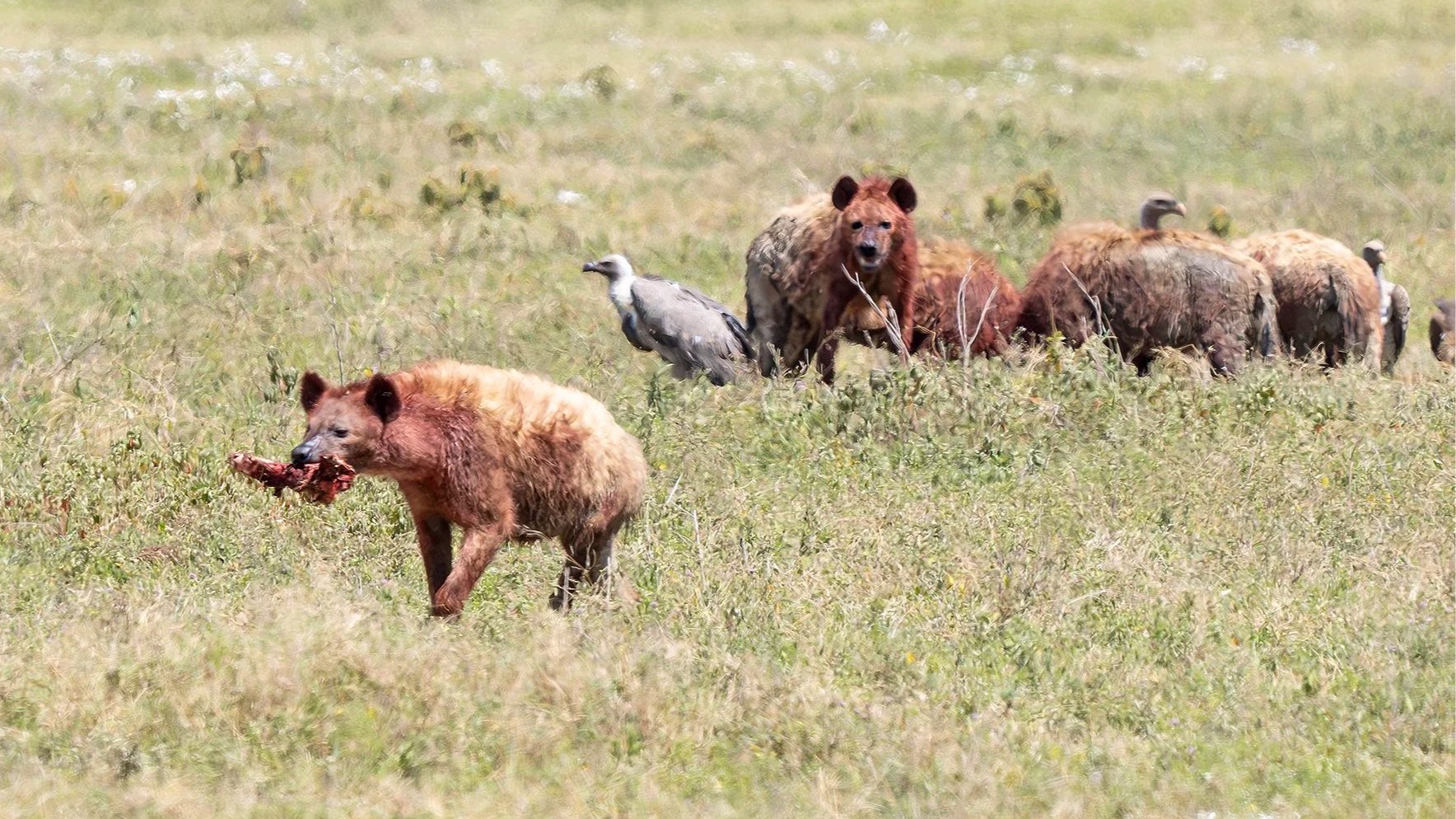
SPOTTED HYENA and vultures
It is not surprising that Tanzania’s Ngorongoro Crater is also known as the 8th natural wonder of the world. From the crater rim at 7500 feet we get a 360 degree view of the the world’s largest unbroken caldera, and the floor 2000 feet below. The crater encompasses 120 sq kms of lush green vegetation, one large salt lake, and several freshwater swamps that hold pods of Hippopotamus. Once inside ,on the crater floor, we witnessed a wonderful array of large mammals and birds in this incredible open setting. Elephant, African Buffalo, Eland, Zebra, Grant’s and Thomson Gazelle are joined by influx of wildebeest as they pass through during their annual migration. This is one of the best places to spot a Black Rhinoceros and you won’t be disappointed. It is what everyone wants to see!
Predators abound inside the vast crater. There are roving clans of Spotted Hyena’s; prides of Lions, often at a kill; a few Cheetah and Serval. We have even seen Caracal, an elusive mid-sized cat that is normally a nocturnal hunter preying on birds and small mammals. Leopard watch and wait from the acacia forests. Scavengers thrive within the crater as well, with regular sightings of African Golden Wolf, Black-backed Jackal, Marabou Stork and vultures, (with White-backed and Rueppell’s being the most common). Both predators and scavengers do not have a problem finding a meal.
In years of abundant rainfall, Lake Magadi fills at the bottom of the crater. This attracts thousands of Greater and Lesser Flamingos, forming a pink ribbon around the edge. The variable lake depth allows us to get close to these stunning birds for excellent photo opportunities. Cape and Blue-billed Teal, Pied Avocet, Ruff, Gull-billed Tern, Grey-hooded Gulls, Greenshank and Marsh Sandpiper can also be seen along the waters edge. In areas with wetter grasses, Grey Crowned Cranes might be foraging. In the reed beds will we see Fan-tailed Widowbirds. In the drier short grasses, Secretarybird and White and Abdim’s Stork roam. There is a high chance of seeing Kori Bustards displaying with their distinct white under tails.
There is so much to see in this natural amphitheater! A day spent here goes by quickly. It is a true wonder, not to be missed, and surely a major highlight of any Safari to Northern Tanzania.
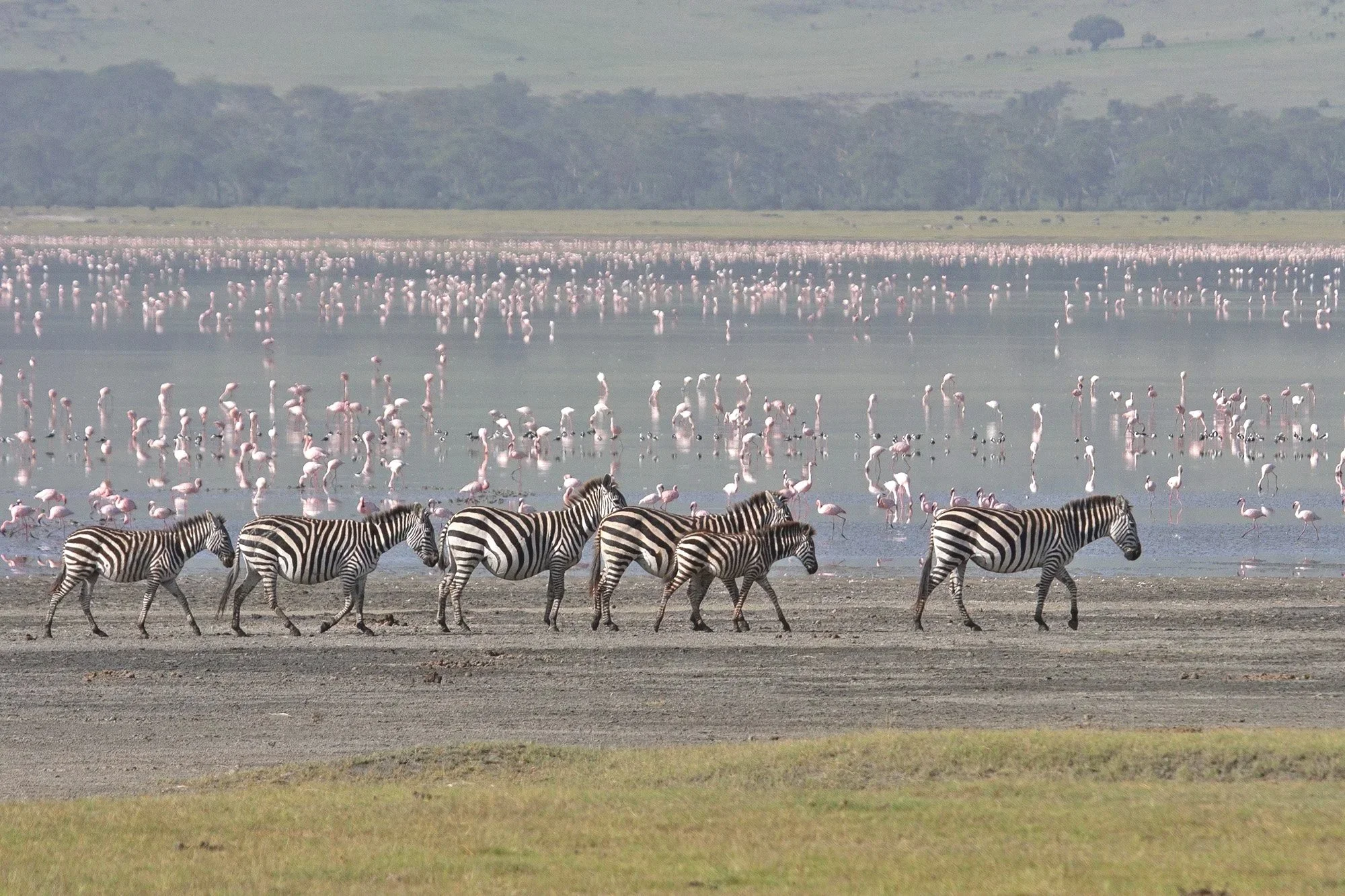
ZEBRA and LESSER FLAMINGOS on LAKE MAGADI