Specialty Birds of Botswana’s Okavango Delta
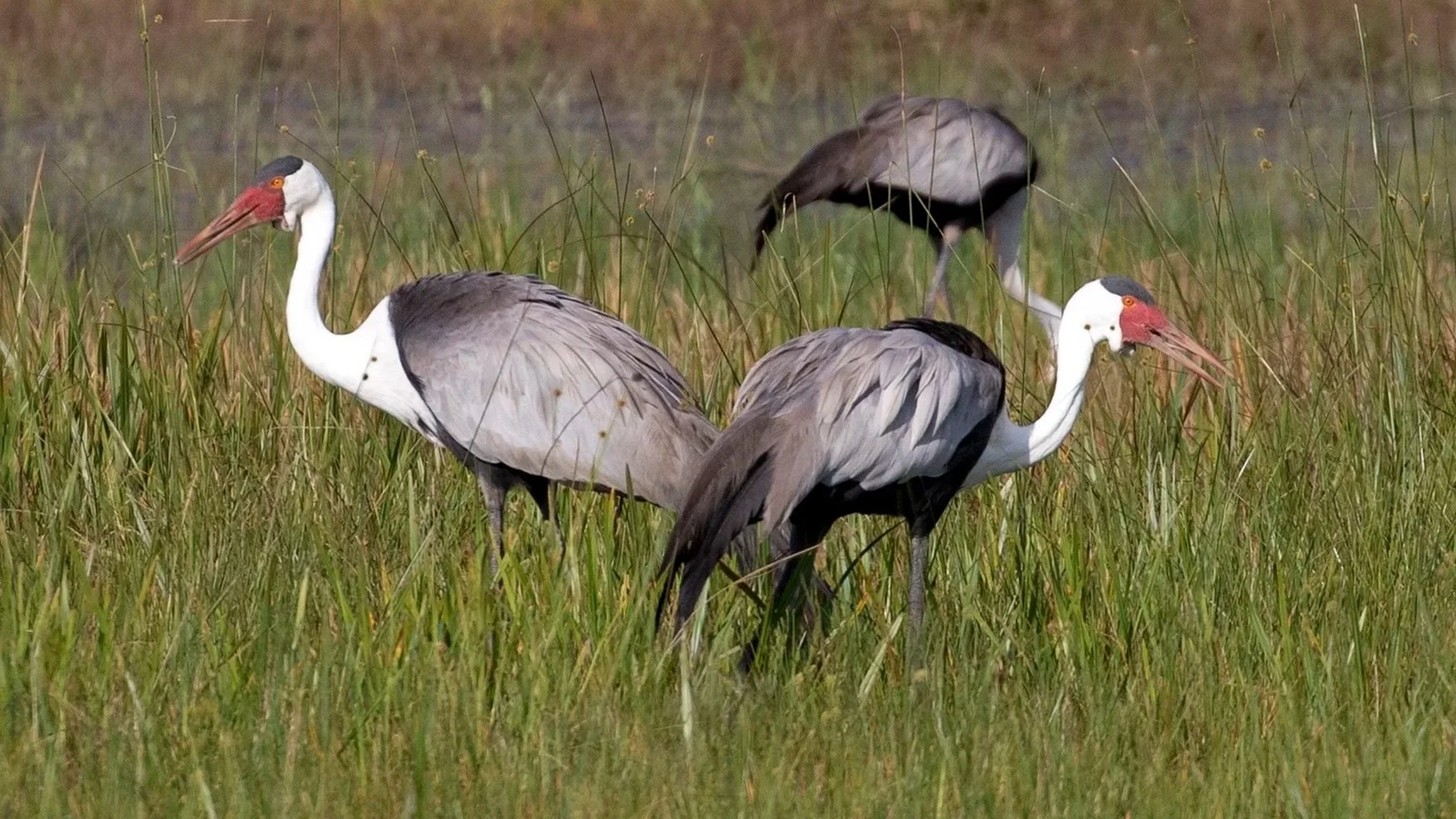
WATTLED CRANE
Being the world’s only inland delta, the Okavango Delta is such a unique place, in particular because it exists within the Kalahari desert! It is a large flat wetland, that floods annual between May and September when waters from the Angolan highlands flow into the delta, more than doubling its size from 2300 sq miles (about the size of Delaware) to 6500 sq miles (about the size of Connecticut) as the plains flood. Access is easy either in the open safari vehicle, by boat or quietly being poled in a mokoro, the traditional dugout canoe.
This wildlife-rich area has an abundance of waterbirds such as African Jacana, Squacco Heron, African Darter, Yellow-billed Stork, Goliath Heron, Long-toed Lapwing, Spur-winged Goose, the diminutive Malachite Kingfisher, and of course the majestic African Fish Eagle that patrols the waterways. While they may be a common sight, there are a few birds that are considered target species, these being iconic wetland species, regional near-endemics and secretive nocturnal hunters easiest to see when in the Okavango Delta.
Wattled Crane — With fewer than 10,000 remaining, the Okavango Delta hosts the world's largest concentration with approximately 1,500 individuals. It is the tallest crane in Africa, and is named for its distinctive wattles, red and white flaps that hang from their throat. The wattles may indicate the crane's mood - shrinking in caution, or elongating in excitement.
Pel’s Fishing Owl — is one of the most sought-after birds and a major highlight of our wildlife safaris in Botswana. Second in size only to Africa’s Verreaux's Eagle-owl, this huge rare elusive ginger-colored owl is a sight to behold, when we see them in the heart of the delta. As few as a hundred pairs live in the Okavango Delta among riverine woodlands. They prefer slow-moving rivers with large overhanging branches from which to roost and forage. They are very efficient hunters using their sharp talons to grab fish from just below the waters surface.
African Pgymy-Goose — The Okavango supports the largest population of this species, the continent's smallest duck. It is one of the most beautiful waterfowl in the Okavango Delta. These diminutive, shy and elusive dabblers tend to avoid open water, and are often seen in pairs or small family groups in slow-moving, lily-covered inland wetlands.
Slaty Egret — is near-endemic to Botswana, and one of two globally-threatened species (the other being Wattled Crane) found in the Okavango Delta. Slaty gray-blue in colour with a reddish-brown throat and yellow legs and slippers, this small egret stalks shallow lagoons along the edges of emergent vegetation.
Coppery-tailed Coucal — This is a large bird 19” with a hefty bill. It is endemic to south-central Africa, with the delta being on the southern edge of their range. They prefers dense waterside vegetation, where it is a skulker. It is primarily terrestrial, feeding on amphibians, reptiles, small birds, invertebrates, fish.
African Skimmer — The Okavango Delta is a stronghold for this skimmer, a near-threatened species scattered across sub-Saharan Africa. These birds feed by flying low across water channels with their long, razor-sharp lower mandible open and ready to scoop fish; it's always wonderful to watch them skimming. They nest in colonies on wide exposed sandbanks, when water levels are low.
White-backed Heron — Notable for its huge white eye-ring surrounded by bare skin, it is one of the more elusive herons in the Okavango Delta. Shy and solitary, this nocturnal bird roosts deep in dense tangles of riverine vegetation along the water's edge, becoming active around dusk. On sunset boat rides, we may be fortunate to see one.
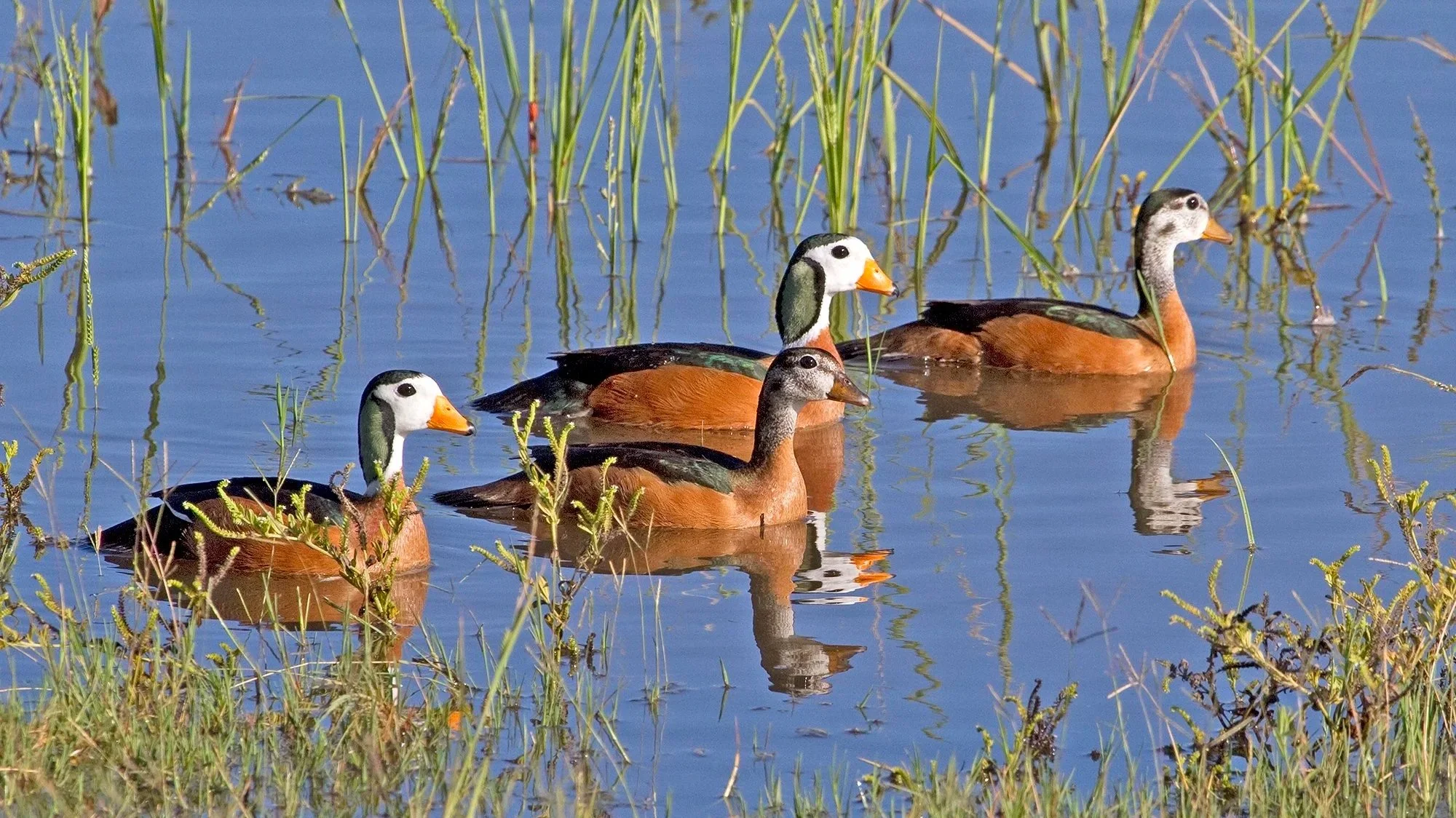
AFRICAN PYGMY GOOSE